Tuesday, January 14, 2014

Tips for Dry Winter Skin

Welcome back to my blog. My name is Sudhir Polisetty and I am a dermatologist at The Dermatology Center in New Albany, Indiana. With record breaking cold temperatures and wind chills sweeping the country last week, I got a lot of questions about dry winter skin. It’s common for skin to dry out during the winter and this can lead to itching, cracking, flaking, and bleeding in certain cases. Fortunately the USNews and World Report recently shared a few tips for preventing and treating dry skin.

Avoid Long, Hot Showers
One tempting way to escape cold weather is to relax in a long, scalding hot shower. As Dr. Stephen Stone of the American Academy of Dermatology notes, “Being in the water for a long time and using hot water can be extremely drying to the skin.” Keep skin from drying by making efforts to take shorter showers using only warm water.

Consider Skin Cream
Applying a skin cleanser following a shower might help reduce itching while moisturizer, ointments, and creams are also shown to be more effective than skin lotion. Instead of rubbing skin cream, which can cause irritation, gently pat the cream onto your skin.

Know Your Skin Care Products
If you use soap, deodorant, or products that contain fragrances, these products will often cause irritation if your skin is already dry. Evaluate the ingredients of any skin care products you use to make sure that product is not exacerbating the problem.

Use Proper Hand Washing Techniques
Washing hands too frequently during winter can dry out the skin, so consider alternating between a washing hands and using hand sanitizer. Additionally, get into the habit of applying moisturizer or hand cream after washing hands.

If dry skin continues to be an issue, make an appointment with your dermatologist. He or she will be able to prescribe stronger ointment or diagnose underlying health conditions, such as eczema.

Thanks for reading,

Sudhir Polisetty

Learn more about me on my MD.com profile, or read more of my dermatology blog posts on Wordpress: http://sudhirpolisetty.wordpress.com/blog/

Thursday, January 2, 2014

Most Dermatology Residency Programs Offered Cosmetic Training


Welcome back to my blog. My name is Sudhir Polisetty and I am a dermatologist practicing in New Albany, Indiana. Although I do not address cosmetic dermatological procedures, I recognize that it is a very important dermatology specialty. According to a new article in JAMA Dermatology, cosmetic dermatological surgical training is offered by most dermatology residency programs in the United States.

Researchers conducted the study by e-mailing a survey to 114 American dermatology residency program directors (PDs). The primary goal of the survey was to determine which resources are available for cosmetic dermatology training in the United States, though it also sought to gauge overall PD attitudes towards cosmetic dermatology training during residency. Other questions focused on strategies that training programs used to overcome all barriers seen in resident-performed cosmetic dermatology procedures, such as discounted prices.

46 percent of the contacted group responded to the survey (53 PDs). According to the results, all but three programs (94%) provided cosmetic dermatology training using botulinum toxin while 47 of the 53 (89%) offered training with hyaluronic acid fillers. 60 percent of the surveyed programs offered discount pricing for some cosmetic procedures, with the most frequently discounted procedures being:
  • Botulinum toxin (94% discounted)
  • Hyaluronic acid fillers (84%)
  • Vascular lasers (53%)
  • Hair removal lasers (38%)

When asked for their general attitudes on cosmetic dermatology training in residency programs, 38 percent of respondents believed it should be necessary. 17 percent of respondents believed it was appropriate for residents to gain hands-on training with cosmetic dermatology procedures while only 27 percent said residents should not be required to perform any cosmetic procedures.

The researchers concluded that while most programs offer hands-on cosmetic dermatology training, there are several barriers to training. They believed procedural competency is imperative to ensure patient safety. Ideally I would like to see a survey with a higher response rate, as 53 PDs is a small sample size.


Thanks for reading,
Sudhir Polisetty

Learn more about me on my about.me page, or by viewing my MD.com profile: http://sudhirpolisetty.md.com/

Thursday, October 10, 2013

Mobile Dermatology Apps Offer Benefits and Drawbacks

There are currently more than 200 dermatology apps, which offer
benefits and drawbacks for patients and dermatologists alike.
Welcome back to my blog. The purpose of this blog has been to shine a light on interesting development and trends in the world of general dermatology so that patients and healthcare providers alike are better informed. When treating patients at The Dermatology Center in New Albany, Indiana, I have recently noticed patients using dermatology related mobile apps. A new report in JAMA Dermatology uncovered more than 200 dermatology apps, with half of them created for non-doctors. These apps offer benefits and drawbacks when it comes to addressing dermatology issues.

Popular dermatology related mobile apps include sunscreen recommendation guides, mole photo storage apps, and other tools to aid in the prevention and diagnosis of melanoma. Researchers divided the 229 dermatology-related apps into the following categories:
  • General dermatology reference (26.6%)
  • Self-surveillance/diagnosis (17.9%)
  • Disease guides (17%)
  • Educational aids (8.7%)
  • Sunscreen/UV recommendations (8.3%)
  • Calculators (5.2%)
  • Teledermatology (3.5%)

These categories represented less than 3% of the apps available in the marketplace: conference, journal, photograph storage/sharing, dermoscopy, pathology, and other. Researchers broke the 229 apps down into 209 unique apps and another 17 versions of existing apps on other operating systems. More than half of these apps are offered free of charge (51.1%) with the most expensive app costing $139.99. The identified target audiences were:
  • Patients (51.1%)
  • Health care providers (41%)
  • Both (7.9%)

While these apps increase access to medical knowledge, the study’s senior author, Dr. Robert Dellavelle, is concerned that people are getting the wrong information. He added that very few of these apps are clearly made by medical professional and that patients and doctors should maintain a healthy sense of skepticism when using these apps; especially ones that claim to help spot conditions such as skin cancer. Misinformation on these apps could delay a real diagnosis and jeopardize patient health. Ideally, these apps should not be used in place of visiting a dermatologist but patients should instead consult with a doctor before using the app’s data to make treatment decisions.


Thank you for reading,


You can learn more about me by subscribing to my Tumblr blog or by viewing my profile on Expertfile: http://www.expertfile.com/experts/sudhir.polisetty

Tuesday, September 10, 2013

Sunscreen Recommendation Rates Low

Welcome back to my general dermatology blog. I have written in past blog posts about skin care and the benefits of regular sunscreen usage, so a recent article on new sunscreen research caught my eye. According to findings published in the September 4th issue of JAMADermatology, physicians discussed sunscreen rates with patients during less than 1% of visits.

Researchers at the University of Wake Forest conducted their study on trends in sunscreen recommendations among physicians after recognizing that sunscreen might not be recommended as often as guidelines dictate. They worked with the National Ambulatory Medical Care Survey to identify patient visits to non-federal outpatient physician offices at American ambulatory care practices during which the physician recommended sunscreen. The data covered patient visits between January 1, 1989 and December 26, 2010.

The National Ambulatory Medical Care Survey reported an estimated 18.30 billion patient visits nationwide during the survey time frame. Physicians mentioned sunscreen during 12.83 million patient visits, which amounts to just 0.07% of all visits, although mention of sunscreen was reported for 0.9% of patients visits in which a patient was diagnosed with skin disease. Dermatologists fared a little better, mentioning sunscreen during 1.6% of dermatology visits while being responsible for 86.4% of all sunscreen mentions in the survey time frame. The researchers also found that sunscreen was recommended most frequently to patients aged 80 or older and to white patients, while children were the least likely to receive this recommendation.

Researchers concluded that sunscreen mentions during patient visits are still too low, even with patients who have a history of skin disease. They also suggested that high incidence and morbidity of skin cancer can be greatly reduced if patients exercise sun-protective behaviors, but it is up to physicians and dermatologists to make sure patients are properly educated on these behaviors.


Thank you for reading,


Learn more about me on my Weebly page or learn about other dermatology news that interests me on Pinterest: http://pinterest.com/sudhirpolisetty/

Thursday, August 22, 2013

Researchers Uncover Molecule Responsible for Sunburn Pain

Image courtesy of WebMD

Welcome back to my general dermatology blog. An interesting new breakthrough in sunburn research recently made waves in the scientific community. According to a study published in the Proceedings of the National Academy of Sciences, the red skin developing from sunburn is caused by a molecule called TRPV4. This molecule, which is abundant in the skin’s epidermis, could be blocked to greatly protect against the pain caused by sunburn.

This discovery originated from a collaboration between researchers at Duke University, the University of California-San Francisco, and Rockefeller University’s Laboratory of Mammalian Cell Biology and Development. Rockefeller University researchers discovered TRPV4, an ion channel shown to be involved in other pain processes, more than ten years ago.  Duke’s Wolfgang Liedtke and Rockefeller’s Elaine Fuchs recently began testing the role of TRPV4 in the epidermis by building a mouse model missing TRPV4 in the outermost layer of its skin. The mouse’s hind paws, which most closely resemble human skin, were exposed to UVB rays. According to the researchers, unlike normal mice, the mutant mice showed little tissue injury and sensitivity.

Researchers then uncovered the sequence of events in the pain pathway. They found that UVB exposure on the skin activates TRPV4, which causes an influx of calcium ions into the skin cells, which then brings in endothelin (the molecule causing pain and itching in humans), which causes TRPV4 to send additional calcium into skin cells. Finally, researchers attempted to blow the pain pathway by applying GSK205 (a compound that selectively inhibits TRPV4) to the hind paws of normal mice. After doing so, the mice were resistant to the pain-inducing and skin-disrupting effects of sunburn.

These results seem to suggest that blocking TRPV4 channels could keep the epidermis from communicating with the skin’s sensory neurons and ease pain from sunburn. Additional tests will be necessary, but TRPV4 could be a new target for treating and preventing sunburn. TRPV4 might also potentially combat chronic sun damage such as skin cancer and skin photo-aging. For now, however, make sure you are still wearing sunscreen.


Thanks for reading,

You can learn more about me on LinkedIn or read more of my dermatology blog posts on my Wordpress blog: http://sudhirpolisetty.wordpress.com/

Wednesday, August 14, 2013

Treating Varicose Veins with Minimally Invasive Ablation Techniques

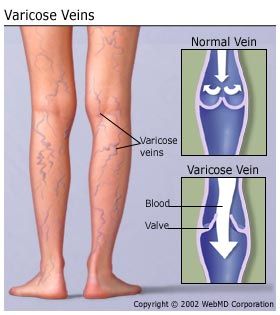
This image from WebMD depicts varicose veins
in a patient's legs.

Welcome back to my general dermatology blog. As a general and surgical dermatologist, I help patients treat and control a number of skin conditions. One condition that usually requires surgical treatment is varicose veins, defined as enlarged veins near the surface of the skin filled with an abnormal amount of blood. New information presented at the American Academy of Dermatology (AAOD)’s Annual Summer Meeting in New York indicates that two minimally invasive techniques could serve as an alternative to surgery for individuals with varicose veins.
Todd Cartee MD, an assistant professor of dermatology at Penn State’s Hersey Medical Center, presented data to AAOD conference attendees regarding two ablation techniques:
  • Endovenous laser ablation: This procedure involves putting patients under using local anesthesia and a ¼” incision. An infrared laser directs heat to the vein, through the incision, in order to destroy the affected vein.
  • Radiofrequency ablation: This process utilizes radiofrequency energy and waves to heat veins and spur their collapse.

According to Cartee, these two procedures allow patients to recover more quickly than traditional methods that require general anesthesia and a long recovery time. He adds that with these two ablation techniques, patients can expect to return to their normal routine one day after the procedure is completed.
Patients who seek treatment for their varicose veins often do so after complaining of leg pain, rashes, blood clots, fatigue, cramping in the calves, skin darkening, itching, and burning. Spider veins, which are similar to varicose veins but smaller and closer to the surface of the skin, do not produce severe symptoms but are instead treated for cosmetic reasons. Cartee reminded attendees that leg vein problems are treatable and then encouraged patients to seek out a board-certified dermatologist if they are concerned by the appearance of their legs or are experiencing problematic symptoms.
Thanks for reading,


Learn more about me by following my blog on Tumblr: http://sudhirpolisetty.tumblr.com/

Wednesday, August 7, 2013

Are Pimples Starting Younger?

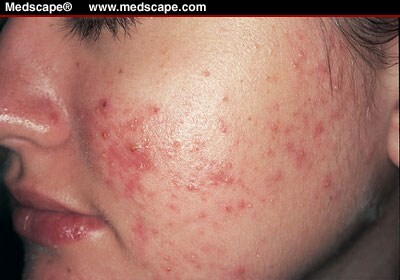
Adolescent acne (above) is becoming more common.
Welcome back to my general dermatology blog. Although I do not perform cosmetic dermatology procedures, I often see patients with questions about these services. One popular topic, especially among teenagers, is how to treat acne.
Acne vulgaris is a human skin disease characterized by pimples, blackheads, whiteheads, and sometimes scarring. Skin areas that are most frequently affected are those with dense sebaceous follicles, including the face, back, and top half of the chest. Conventional wisdom is that acne occurs most commonly during adolescence and continues in adulthood. Acne’s prevalence during the teenage years is attributed to an increase in testosterone, with testosterone levels typically dropping by age 25. I recently read an interesting article from NBC News that suggests more and more elementary school-aged children are developing pimples.
Recent anecdotes from dermatologists indicate that cases of pediatric acne are becoming more common, even in kids as young as 7. Doctors hypothesize that earlier onset puberty is to blame, as this process causes levels of pimple-producing adrenal androgens to increase. Dr. Andrea Zaenglein estimated in the article that she now sees 10-15 new pediatric acne cases each month. She responded by authoring a new set of guidelines for treating kids of all ages, which the American Academy of Pediatrics then endorsed. Zaenglein presented this information at the summer’s American Academy of Dermatology meeting, explaining that the principles of adolescent and preadolescent acne are the same and should both be treated aggressively to get symptoms under control.
Fortunately, parents of children with acne are more likely to make sure the child sticks to the dermatologist’s prescribed treatment plan. Parents should recognize that acne in adolescents is a major problem that could require professional care. Pre-teen acne can be an indicator of more severe acne in teenage years, so it is important to recognize the problem and get children the care they need.
Thanks for reading,


To learn more about me by following me on Twitter or read more of my Dermatology blog posts on my website: http://sudhirpolisetty.com/